Harris-Walz rural proposal urges Congress to restore Affordable Connectivity Program

Broadband Breakfast reports

Democratic vice presidential nominee Minnesota Gov. Tim Walz on Tuesday unveiled his ticket’s plans to improve the lives of rural voters, as Vice President Kamala Harris looks to cut into former President Donald Trump’s support.

The plane also urges Congress to restore the Affordable Connectivity Program, a program launched by President Joe Biden that expired in June that provided up to $30 off home internet bills, and for lawmakers to require equipment manufacturers to grant farmers the right to repair their products.

A Preliminary Evaluation of the ACP Program

There is an interesting report on a preliminary evaluation of the ACP program. I was interested to see the impact that ACP had on employment opportunities for women, but not men…

Conceptually, this study distinguishes two types of program impact. First, it examines the more immediate goal of the ACP program, namely, to promote and help sustain broadband access among vulnerable households. Second, the study probes for broader socioeconomic impacts related to labor market outcomes.
Our primary hypothesis is that the more favorable labor market outcomes observed for eligible individuals are related to increased remote work opportunities, and that these effects will be stronger among female than male workers. We hypothesize that the massive expansion of hybrid work arrangements that followed the pandemic is a key explanatory factor for this trend, and that ACP expanded labor opportunities for women who otherwise would have more limited labor market prospects due affordability constraints in broadband access. …

The results largely confirm our working hypothesis. Overall, eligible individuals are more likely to have home broadband than comparable ineligible individuals, with stronger effects for having any type of Internet connection than for having high-speed (wireline) broadband. Positive impacts on labor force participation and employment are observed for women (but not men), and the effect appears to be driven by an increase in remote work arrangements. Broadly speaking, the results suggest that the positive impact of ACP goes beyond first-order effects on adoption, as the program helped lower-income workers adapt to the expansion of non-traditional labor arrangements in the aftermath of the pandemic.

Pew recognize conundrum for State and households over loss of ACP

The impact of losing the Affordable Connectivity Program subsidies gets a lot of attention, because it is leaving many of low income households without broadband and has changed the math for BEAD funding. Here’s Pew’s latest on the topic…

Support for affordability programs is technically allowed under BEAD and DEA rules, but states are heavily restricted in how they use funds. For example, under the BEAD program, consumer subsidies and other “nondeployment” activities can be funded only if the state demonstrates that it can reach all of its unserved and underserved locations with deployment projects. Currently, less than half of all states anticipate having any nondeployment funding available. And under DEA, affordability subsidies are capped at 10% of a state’s allocation. That’s a drop in the bucket and not a viable alternative to ACP.

In 2024, three strategies to solve this problem emerged, with state lawmakers exploring different approaches to resolve funding gaps and define eligibility. Some lawmakers—such as those in California and Oregon—are considering modifying their state-operated Lifeline subsidy programs in ways that increase the funding available to supplement the $9.25 monthly discount already offered by the federally operated Lifeline program. Others—such as those in New YorkNorth Carolina, and Pennsylvania—considered legislation to establish their own broadband subsidies. In addition, some states debated replicating the BEAD low-cost option provision by requiring service providers under contract with the state to offer plans at a state-determined affordable price.

New York’s Affordable Broadband Act, adopted in 2021, takes a broader regulatory approach and could be another option for states. The law, passed months before the formal creation of ACP but not yet enforced because of a lengthy legal dispute, requires ISPs operating in New York to provide a low-cost option at $15 or $20 for low-income subscribers, depending on the plan’s speed. However, some legal experts have suggested that additional legal scrutiny may be required after the Federal Communications Commission’s recent net neutrality order redefining its regulatory jurisdiction over broadband service providers and other related federal court cases.

Four key findings in recent State EdTech Trends survey

The Benton Institute for Internet & Society recap a recent report…

The State Education Technology Directors Association (SETDA) released its third annual State EdTech Trends survey and report. With this survey of state education technology (edtech) directors, superintendents, commissioners of education, and other state-level policymakers, SETDA aims to catalog the way state education agencies are adapting to the opportunities and risks of increasingly ubiquitous technology.

Four Key Findings

The report presents four key findings based on the survey:

  1. State agencies are stepping up to meet the demand for more support on the responsible adoption of artificial intelligence (AI) in education.

  2. For the second year in a row, cybersecurity is the top edtech priority among state leaders, but fewer state leaders believe their state is providing sufficient funding to support connectivity.

  3. Anxiety about funding appears to increase as federal pandemic funds expire, while home connectivity and access remain the top unmet needs across states.

  4. New survey questions reveal opportunities for state education leaders to support the effective and equitable use of edtech as states appear to invest more in their own capacity.

Could changes in E-Rate help close the ACP gap?

The Minneapolis Star Tribune reports

The Biden administration is moving to blunt the loss of an expired broadband subsidy program that helped more than 23 million families afford internet access by using money from an existing program that helps libraries and schools provide WiFi hotspots to students and patrons.

Jessica Rosenworcel, chairwoman of the Federal Communications Commission, told The Associated Press last week that the agency had voted in July to ”modernize” a federal program known as E-Rate to fill at least some of the gaps left by the Affordable Connectivity Program, which gave families with limited income a monthly subsidy to pay for high-speed internet.

More about E-Rate…

The E-Rate program, established in the 1990s, has provided more than $7 billion in discounts for eligible schools and libraries since 2022 to afford broadband products and services. According to a data analysis by the AP, it offered benefits to more than 12,500 libraries, nearly half of them in rural areas, and 106,000 schools.

For the most recent round of funding, the E-Rate program was expanded to include WiFi on school buses. Starting next year, Rosenworcel said, the list of eligible products will expand to WiFi hotspots.

The Affordable Connectivity Program was helping one in six families in the U.S. afford internet access. Rosenworcel said the decision to include WiFi hotspots in E-Rate was partly a response to the failure to extend the subsidies.

Congresswoman Angie Craig Introduces Bipartisan Bill to Expand the Affordable Connectivity Program

Congresswoman Angie Craig reports...

Today, U.S. Representative Angie Craig introduced the Secure and Affordable Broadband Extension Act to increase funding for federal broadband accessibility programs like the Affordable Connectivity Program that partially expired in April.

Rep. Craig’s bipartisan bill will help ensure rural communities in Minnesota and across the country can access the affordable broadband internet service they need.

This bill will direct $6 billion in federal funding towards the Affordable Connectivity Program, add $3.08 billion to the Federal Communication Commission’s (FCC) Rip and Replace program and require an FCC spectrum auction to offset the cost of this bill.

“In the 21st century, access to reliable broadband internet service is a necessity, particularly in rural areas,” said Rep. Craig. “This bill will ensure Minnesotans can continue to access the affordable internet service they need and help grow our rural economies. I’m proud to have worked across the aisle to bring this critical legislation forward.”

As co-chair of the Bipartisan Rural Broadband Caucus, Rep. Craig has led many efforts to improve high-speed internet in rural communities.

This year, she secured a $1 million federal investment to improve internet access in Le Sueur County, Minnesota.

Click here to read the Secure and Affordable Broadband Extension Act.

Charter Communications reports fewer subscriber loss – but sees impact of ACP loss

ET Telecom reports on Charter’s financials, which reveal an interesting consequence of the end of the Affordable Connectivity Program. Spoiler alert, they lost customers when low-income households lost subsidies…

Charter Communications beat Wall Street estimates for quarterly profit and reported fewer-than-expected broadband subscriber losses on Friday, sending its shares up 7% in premarket trading.

With a highly competitive broadband market providing little opportunity for subscriber additions in major markets, Charter’s bet on rural expansion is boosting its business.

The company’s offerings such as Spectrum Internet, which provides lower cost data plans combined with high-speed internet, is well received by customers.

The broadband and cable TV provider’s internet customers decreased by 149,000 in the second quarter, compared with Visible Alpha estimates of a loss of 264,520 users.

The losses were higher sequentially, which the company attributed to the end of a federal internet subsidy.

Charter has been a particularly big beneficiary of the Affordable Connectivity Program (ACP), a government broadband support program that offered connectivity to 23 million households in the United States.

It posted profit of $8.49 per share, well above analysts’ average estimate of $7.98, according to LSEG data.

Charter now expects its full-year 2024 capital expenditure to total about $12 billion, a decrease from its previously expected range of between $12.2 billion and $12.4 billion.

Losing ACP will cost everyone – but especially IIJA’s covered populations

Benton Institute for Broadband & Society reports on the loss of the Affordable Connectivity Program on the economy…

The end of the Affordable Connectivity Program (ACP) may result in millions of households either eliminating or downgrading broadband service. This, in turn, could mean over $2 billion in lost consumer financial benefits and service delivery efficiencies for health care providers. …

The potential for service termination post-ACP could have significant economic consequences. More than half (55 percent) of ACP households said that being without home service would have a major impact on their ability to purchase items at an affordable price. This could translate into as much as $1.5 billion annually in lost financial benefits from e-commerce for low-income households that used the ACP.

A similar dynamic unfolds for telehealth visits and the forgone cost savings from less telehealth usage. Three in five (60 percent) respondents who used the ACP said that, in the prior three months, they had had an online appointment with a health care provider for a physical or mental health issue. Assuming that households who cut off service once the ACP ends move from telehealth to in-person visits, lost savings for health care service providers could approach $800 million annually.

And on BEAD’s “covered populations,” which are communities that Infrastructure Investment and Jobs Act (IIJA) especially seeks to support…

The survey also explored the ACP and the impact of its expiration on the “covered populations” identified in the Infrastructure Investment and Jobs Act. Some highlights:

  • People with disabilities were among the greatest beneficiaries of the ACP, especially for adding home wireline connections. Some 36 percent of respondents who identified as disabled used the ACP (versus 22 percent for all other respondents). And 24 percent of all respondents with a disability used it for a new wireline home connection, versus 17 percent for all others.

  • Rural households were as likely to use the ACP as all others. Some 27 percent of surveyed non-metro residents said they enrolled in the ACP, compared with 26 percent for all other respondents.

  • Black Americans were more likely to have enrolled in the ACP, as 31 percent of those surveyed said they enrolled in the benefit plan.

  • Hispanics were more likely to say that the ACP’s end will result in them downgrading service; some 45 percent said this compared with 34 percent of all others.

  • Households near the poverty line (i.e., annual incomes below $20,000) were also more likely than others to enroll in the ACP, as 33 percent signed up for the subsidy. Some 27 percent of these households used the ACP for new wireline subscriptions. And nearly one in five (18 percent) of the lowest-income households said they would cancel service upon the ACP’s expiration—twice the rate of other ACP households (9 percent).

The Impact of demise of ACP on low-income households

The Benton Institute for Broadband and Society report on the state of low-income broadband adoption in a post-ACP world…

  • Households planning to end or cut back on service: Half of surveyed households that had enrolled in ACP said they would either terminate service or downgrade to a slower or cheaper option upon the program’s end. Some 13% of ACP households said that losing the $30 per month service subsidy would cause them to cancel service and 36% said that, without ACP, they would seek a cheaper plan.
  • Lost financial benefits: Losing broadband service would inhibit online usage, as low-income respondents said not having at-home broadband would significantly impact their online shopping and curtail using the internet for telehealth appointments. The report’s analysis values these lost opportunities at over $2 billion annually.
  • The gap between what people pay and what they feel comfortable paying:  The survey asked people what they pay per month for standalone home broadband service. The average figure cited was $66.53 per month. Yet when asked what they consider to be too expensive a price to pay for service, 56% cited monthly bills of $75 or less. This means many households who pay for service find it a strain on their household budgets. More than half (53%) say that it is difficult for them to pay their monthly broadband service fee.
  • Persistence of subscription vulnerability: Some 43% of all low-income households are subscription vulnerable, meaning they live at or near the poverty line, have had service disconnected due to difficulties paying their monthly internet bills, or express significant concerns about service affordability. This comes to approximately 19 million households in the United States that are subscription vulnerable. For them, maintaining internet service is a financial balancing act. The ACP helped address this challenge for low-income households.

Are broadband providers in Minnesota offering low-income discounts to replace ACP?

I was spurred by Benton Institute for Society’s list, What are [National] ISPs Offering Consumers After ACP?, to take a look at what providers in Minnesota are doing now that federal funding for broadband subsidies for low-income households (ACP) has stopped. I started with a list created by the Office of Broadband Development of Broadband Providers by County. I checked out the websites of the providers on the list to see if I could find mention of any deals on their website or (for some if ambiguous) sought more info via email.

At a high level, here’s what I found:

  • There were 112 providers
  • 8 providers have programs akin to the ACP discount
  • 52 provides mention federal (Lifeline) and state (TAP) subsidies for low-income households
  • 41 providers make no mention of discounts
  • 3 providers mention ACP as if it’s still happening
  • Several mention discounts, such as for students, seasonal accounts or free Wifi in public spaces in the community

Here are the providers I found with an ACP-like discount include:

  1. Netwave
  2. Arvig
  3. Garden Valley
  4. Ace Telephone
  5. BEVCOMM
  6. Vast
  7. MVTV Wireless
  8. USI

And here’s the list from Benton with a presence (even mobile-only) in MN with an ACP-like discount:

  1. AT&T
  2. Comcast
  3. Mediacom
  4. Spectrum/Charter
  5. Verizon

There are some caveats. I didn’t bother with folks on Benton’s list. I condensed as much as possible; if a company went by several names, I tracked them once. I didn’t include satellite-only providers. Also – I’m going to call this a list in progress, because policies change. If I have missed something, please let me know: atreacy@treacyinfo.com. Also, as a website developer of 30 years, I know for sure the webmaster, isn’t always the first to know. But I wasn’t going to make 100+ phone calls. You can access a spreadsheet of the information I tracked.

It’s hard to draw conclusions because each provider is different. I will point to a recent podcast (Connect This!) from the Institute for Local Self Reliance, where host, Christopher Mitchell, talks to industry leaders Robert Boyle, Travis Carter, Kim McKinley, and Blair Levin because these talk about how/why a provider might try to continue their own version of ACP. Slight spoiler: providers are happy to do good (continue an essential service) especially if they are generating some income. But it’s difficult to continuing offering a service for a loss, which means it makes more sense when there are more customers and cost to build and maintain is lower. They also dive into higher level need providers have for more customers (which ACP brought) to recoup costs and some providers have been counting on that bump in customers when creating plans for future builds.

Anecdotally, many fixed wireless providers don’t mention federal/state subsidies. Perhaps because that’s a newer industry than telecom and perhaps less aware of the role subsidies can play in building infrastructure. Also, some companies post their discounts prominently, others do not.

EVENT Jun 10: Building for Digital Equity (#B4DE) Pathways to Affordable Connectivity

Happening today at 2pmCST…

The Institute for Local Self Reliance (ILSR) Community Broadband Networks Initiative and the National Digital Inclusion Alliance (NDIA) are gearing up for the second installment of the Building for Digital Equity (#B4DE) event this year, and encouraging digital equity practitioners to save the date.

The popular (and free) virtual gathering will be held June 10, 2024 from 3 to 4:15 PM ET and will feature an Internet Affordability theme: Pathways to Affordable Connectivity

You can register for the event here.

Coming on the heels of our last B4DE event in March, we are excited to follow up with an informative agenda that will cover:

As with the previous #B4DE events, the June live stream will once again be sponsored by UTOPIA Fiber and co-hosted by NDIA’s Pamela Rosales and ILSR’s Community Broadband Networks Initiative Director Christopher Mitchell.

Some broadband providers commit to extending Affordable Connectivity Plans through 2024

The Hill reports...

More than a dozen internet service providers have agreed to continue offering discounted internet plans to low-income households through the end of 2024, as the federal program subsidizing the discounts comes to an end, the Biden administration announced Friday.

AT&T, Comcast, Cox, Spectrum, Verizon and nine other providers will continue offering their $30 or less plans to those currently enrolled in the Affordable Connectivity Program and other eligible households.

Other participating providers include Allo Fiber, altafiber (and Hawaiian Telcom), Astound Broadband, IdeaTek, Mediacom, MLGC, Optimum, Starry and Vermont Telephone Company.

The Affordable Connectivity Program, which provided broadband discounts to more than 23 million households, will halt benefits completely starting Saturday due to a lack of funding.

While some households will maintain their low-cost internet plans under the newly announced agreements with providers, the Biden administration called on Congress once again to pass an additional $6 billion in funding to extend the program.

BEAD’s low-cost service requirement in a post-Affordable Connectivity Program world

Fierce Telecom reports on BEAD’s low-cost service requirement after the sunsetting of the national Affordable Connectivity Program world…

Lawmakers are butting heads over a provision within the Broadband Equity Access and Deployment (BEAD) program that allows states to require low-cost service options from participating service providers. Democrats are calling it an affordability policy. Republicans say it’s heavy-handed government regulation.

The provision came up more than once during a May 15 hearing in the House Subcommittee on Communications and Technology, which was meant to focus on the 2025 budget for the National Telecommunications and Information Administration (NTIA).

As part of the BEAD planning process, the NTIA is considering each state’s definition of a low-cost option, provided that it meets the standards laid out in the program’s statute. The agency has already approved some state BEAD plans that set $1 as the amount for a required low-income service option.

NTIA head Alan Davidson said he thinks that process is “consistent with the [BEAD] statute which required a low-cost option.”

However, in her remarks Rep. Cathy McMorris Rodgers said that it amounts to the NTIA “allowing and even encouraging” states to conduct rate regulation. She argued that the Infrastructure Investment and Jobs Act (IIJA), which governs the BEAD program, “explicitly states” that NTIA is not authorized to regulate rates charged for broadband services.

Senate Commerce Committee Set to Vote on Short-Term ACP Funding

Broadband Breakfast reports

The Senate Commerce Committee is set to vote Thursday on a bill that would provide short-term funding for the Affordable Connectivity Program as well as the rip and replace program.

Lawmakers had hoped to attach ACP funding to the must-pass Federal Aviation Administration reauthorization that made it out of the chamber on Thursday, but Senate leadership was successful in keeping non-aviation amendments off the bill.

Despite efforts from many the Affordable Connectivity Program was not continued

Wired reports

TODAY MARKS THE end of the Affordable Connectivity Program, a landmark piece of US government legislation that aimed to make it easier for people to afford an internet connection in their homes. The program’s end marks a big shift, with the cessation of benefits set to affect millions of Americans who might need them most.

In a Q and A format Wired goes through the basics, starting with what was it…

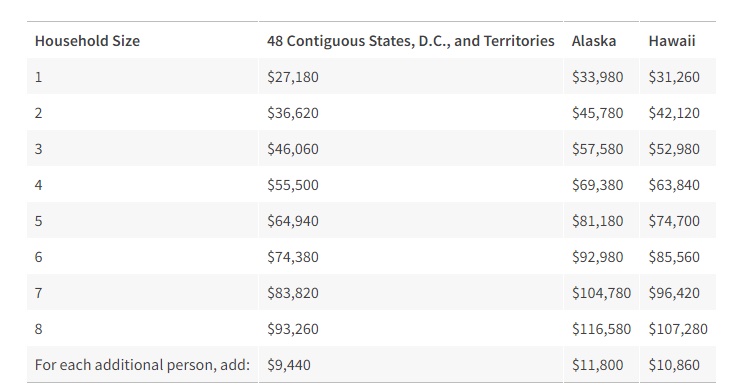
In 2021, the US Congress passed the $1.2 trillion Infrastructure Investment and Jobs Act, also known as the Bipartisan Infrastructure Deal. It was a massive, ambitious piece of legislation that aimed to shore up a variety of floundering industries, including transit networks, energy systems, and public utilities. The ACP was part of that deal. It set aside $14.2 billion to fund credits that could help low-income households afford high-speed internet. If a family’s household income was below 200 percent of the Federal Poverty Guideline per year, they were eligible for a $30 monthly credit on their broadband bill. People living on Tribal lands were eligible to receive up to $75.

To what’s happens next…

Unfortunately, any of the families who have been getting the ACP benefit will have to start paying full price for their internet connections—provided they’re able to afford it. If a household’s income is below 200 percent of the federal poverty line, or if the household claims other government benefits like SNAP, Medicaid, or Social Security, there’s a way to get a similar reduction in internet cost, albeit a much smaller one. The Universal Service Administrative Company offers a service called Lifeline, which can pay up to $9.25 per month for a connection (and up to $34.25 per month for anyone living on qualifying Tribal lands).